CPR & AED: Why Knowing These Skills Could Save a Life
Empower yourself to act confidently in emergencies and make a real difference.
Cardiovascular emergencies are on the rise in Singapore, and it’s not just seniors or the elderly who are affected (CNA, 2025). Recent reports show an increase in heart attack cases, with younger adults also experiencing these events due to lifestyle and health risk factors (Seah, 2025).
Heart Attack vs. Cardiac Arrest
While a heart attack occurs when blood flow to the heart is blocked, sometimes it can trigger a cardiac arrest, where the heart suddenly stops beating effectively and can no longer pump blood to the brain and vital organs (VeryWell Health, 2025).
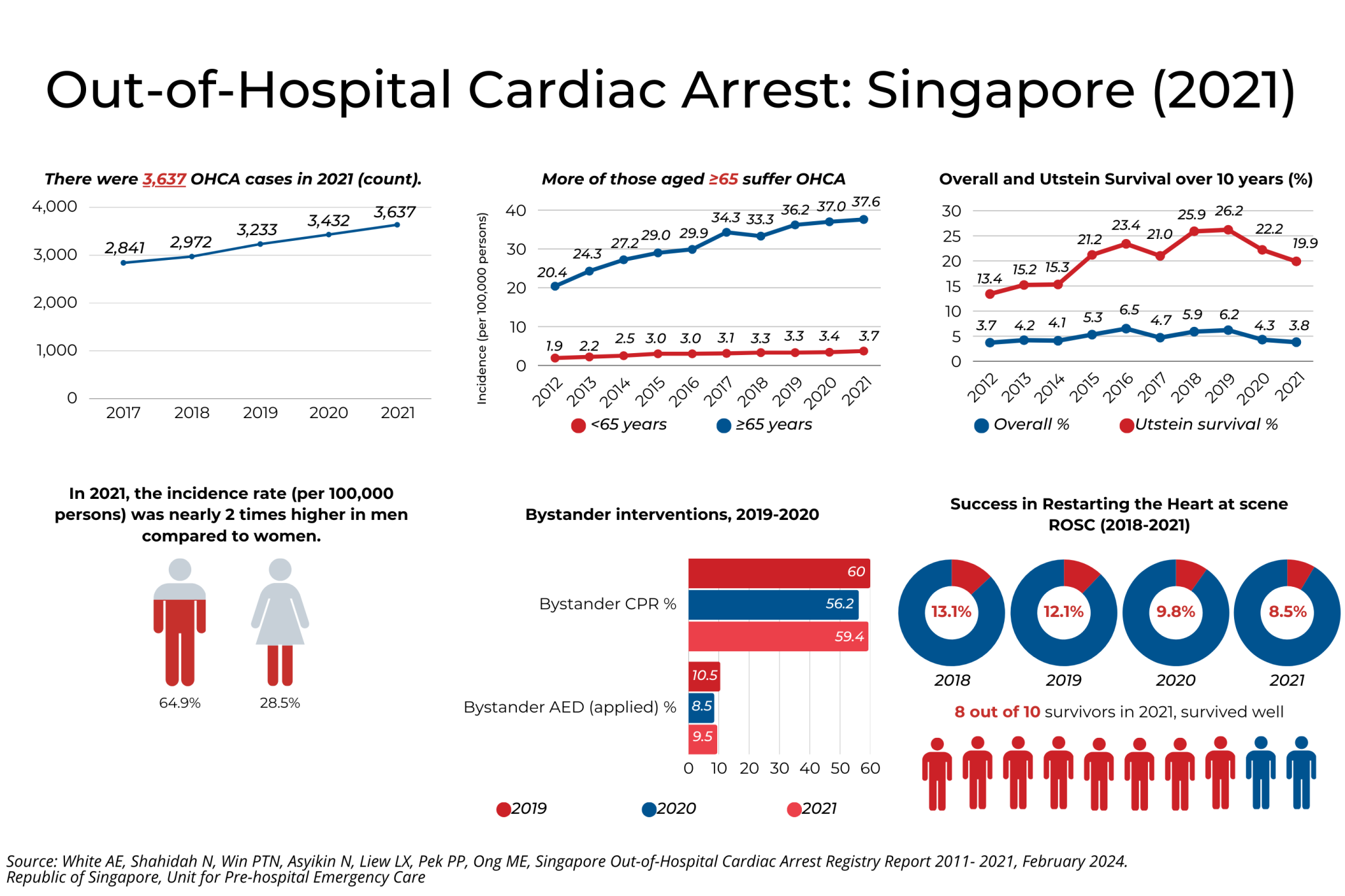
Out-of-hospital cardiac arrests (OHCA) are increasing every year, with more incidents occurring outside medical settings. In these critical moments, every second counts, and immediate action means the difference between life and death (Seah, 2025).
Rising Heart Attack Cases in Singapore
Data from the Singapore Myocardial Infarction Registry show that heart attack cases have risen from 8,000 in 2011 to over 12,000 a decade later. It is projected that the number of heart attacks in Singapore could rise nearly threefold from around 480 cases per 100,000 people this year to approximately 1,400 per 100,000 by 2050.
Younger adults are increasingly affected by high cholesterol, obesity, and stress, which can lead to heart attacks and cardiac arrest.
These trends highlight that cardiac emergencies can happen anywhere—at home, work, or school—and emphasize the importance of trained responders in the community (Seah, 2025).
Why CPR & AED Are Critical
When a cardiac arrest occurs, oxygen no longer reaches vital organs (VeryWell Health, 2025).
Research has shown that:
- Brain activity starts to decline within 20–30 seconds after a cardiac arrest (How Long Does Brain Activity Last After Cardiac Arrest?, n.d.).
- Irreversible brain damage can begin in 3–4 minutes.
- After 5–6 minutes, the chance of meaningful recovery is extremely low.
Immediate CPR and AED use helps maintain blood flow and oxygen to the brain and vital organs, helping prevent irreversible damage. It can restore signs of life, such as a pulse or effective heartbeat, and significantly increase the chances of survival even before paramedics arrive (Close to Heart: Giving the Heart a RESET, 2024).
Cardiopulmonary Resuscitation (CPR) manually pumps blood through the body. Automated External Defibrillator (AED) delivers a controlled shock to help the heart restart. Studies show that early CPR combined with AED use can more than double survival rates.
From Awareness to Action
Knowing the theory and the difference between a heart attack and cardiac arrest is crucial, but having the skills and the confidence to act decisively during a medical emergency is what truly saves a life.
This is why first aid training is so important: it equips individuals with the knowledge, skills, and confidence to respond effectively when every second counts. You never know when someone’s life might depend on your actions.
References
- Seah, S. (2025b, November 6). Heart attacks remain on the rise in Singapore; experts say it is prudent to control risk factors. CNA.
Read more - CNA. (2025, November 4). Number of heart attacks in Singapore continues to rise. CNA.
Read more - Close to Heart: Giving the Heart a RESET. (2024, April 15).
Read more - How long does brain activity last after cardiac arrest? (n.d.). Blue Ocean Safety.
Read more - VeryWell Health. (2025, December 15). Rod Brouhard, EMT-P.
Read more