Why Is First Aid Important?
Do You Really Need to Learn First Aid? Here’s Why It Matters
You don't need to work in healthcare to face a medical emergency. Sometimes, the only person available to help is you.
Most people don't expect to use first aid.
Until the day they need it.
Someone could collapse from cardiac arrest at work.
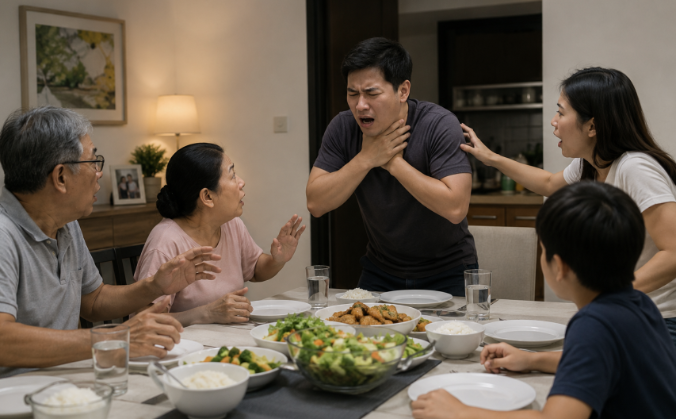
A family member could suddenly start choking during dinner. A child could suffer a serious injury while playing.
Emergencies don't make appointments.
And they don't only happen when a doctor, nurse or trained first aider happens to be nearby.
When something goes wrong, the first person available to help could simply be you.
What Would You Do?
Imagine you're having dinner with your family when someone suddenly begins choking. They can't speak. They can't breathe properly.
Everyone around the table starts to panic.
Would you know what to do?
Or imagine you're at work and your colleague suddenly collapses beside you.
Would you know when to call 995? Could you perform CPR?
These situations can be frightening, but that's exactly why learning first aid matters.
During an emergency, knowing what to do can turn you from a bystander into someone capable of providing immediate assistance while professional medical help is on the way.
Emergencies Go Beyond CPR
CPR and AED are important lifesaving skills, but cardiac arrest isn't the only emergency we may encounter in everyday life.
Someone around us could experience:
- Choking
- Severe bleeding
- Burns
- Asthma attacks and breathing difficulties
- Seizures
- Fractures and injuries
- Fainting and loss of consciousness
- Cardiac arrest
The reality is that we don't get to choose what kind of emergency happens in front of us.
You may start learning first aid because you want to know CPR. But one day, the skill you actually need could be knowing how to help someone who is choking, bleeding or experiencing another medical emergency.
When it comes to first aid, learning more gives you more ways to help.
"But I Can Just Call 995, Right?"
Calling 995 during a life-threatening emergency is essential.
But there may still be precious minutes between making that call and professional emergency responders reaching the casualty.
Those minutes matter.
A trained bystander may be able to provide appropriate first aid, perform CPR, retrieve an AED or help prevent a casualty's condition from worsening while waiting for professional help.
First aid training isn't about replacing doctors or paramedics. It's about knowing what you can safely do before they arrive.
First Aid Isn't Only for People Who "Need" It
For many people, the first time they think seriously about first aid training is when their employer tells them:
"You need this certificate for work."
For certain professions and responsibilities in Singapore, specific first aid or life-support training may indeed be required.
But a requirement shouldn't be the only reason we learn.
You don't need to be a healthcare professional to see someone collapse.
You don't need to work in childcare for a child in your family to choke.
You don't need to be your company's designated first aider for the colleague sitting beside you to experience a medical emergency.
And you don't need to be a sports coach for someone to get injured while exercising with you.
First aid is ultimately a life skill.
The certificate may expire.
The value of knowing how to help someone doesn't.
So, What First Aid Training Do You Need?
While anyone can benefit from learning first aid, some professions and roles in Singapore have specific training or certification requirements.
Knowing which course applies to you is important, especially if you're taking the training for professional or regulatory purposes.
For example:
- Sports Coaches (NROC) – Standard First Aid, including CPR + AED (NROC | National Registry of Coaches, n.d.)*
- Childcare & Preschool Professionals – Child First Aid, depending on the applicable role and requirements
- CERT First Aiders – Appropriate CERT First Aider training
- Medical & Healthcare Professionals – BCLS + AED or other training depending on professional and workplace requirements
What About Everyone Else?
You don't need a professional requirement to learn first aid.
Some people learn because they want to be prepared for their family.
Some want to feel more confident if an emergency happens at work.
Others simply believe that knowing how to help another person is a useful skill to have.
Depending on what you want to learn, you may choose focused training such as CPR + AED, or broader first aid training such as Standard First Aid (SFA).
What's important is understanding what you want to be prepared for and choosing training that gives you the relevant knowledge and practical skills.
If someone I loved stopped breathing in front of me tomorrow, would I know what to do?
If my colleague started choking during lunch, could I help?
If someone collapsed beside me, would I have the confidence to step forward?
First aid training can't guarantee the outcome of an emergency.
What it can do is give you knowledge and practical skills so that, if an emergency does happen, you are better prepared to respond.
From Knowing to Acting
At Rolling Pineapple, we believe first aid training should be about more than passing an assessment and receiving a certificate.
It should help people develop the knowledge, practical skills and confidence to act.
Whether your profession requires first aid training or you simply want to be better prepared for the people around you, learning these skills could make a meaningful difference when you least expect it.
And if you're unsure where to start, you don't have to figure it out yourself.
Our Course Recommendation Tool helps you identify your training goal, check which requirements may apply to you and find a course suited to your needs.
Whether you're learning for work, your profession, your family or simply for yourself, start by telling us why you're taking the course.
We'll help guide you from there.
Find the right course for you with Rolling Pineapple's Course Recommendation Tool.
Because you may never need to use first aid.
But if you do, you'll be glad you learned it.
References
- Information for public access. (n.d.-b). Retrieved August 16, 2026, from https://srfac.sg/public-information/
- National Registry of Coaches. (n.d.). Sport Singapore. Retrieved August 16, 2026, from https://www.sportsingapore.gov.sg/support-resources/national-registry-of-coaches/
- NROC | National Registry of Coaches. (n.d.). Retrieved August 16, 2026, from https://coachsg.sportsingapore.gov.sg/nroc?
- Company Emergency Response (CERT). (n.d.). Default. Retrieved August 16, 2026, from https://www.scdf.gov.sg/fire-safety-services-listing/company-emergency-response-cert
- BCLS requirement. (n.d.). Singapore Dental Council. https://www.sdc.gov.sg/for-professionals/registered-dentists-and-ohts/continuing-professional-education/bcls-requirement/
- Educator certification. (n.d.). Retrieved August 16, 2026, from https://www.ecda.gov.sg/early-childhood-educators-(ece)/becoming-a-certified-educator